According to the World Health Organization (WHO), vaccines save an estimated 3.5 to 5 million lives each year and help prevent more than 30 life-threatening diseases. Over the past 50 years, vaccination is estimated to have saved approximately 154 million lives.

Vaccines do more than protect individual health. They curb the spread of infectious diseases, ease the burden on healthcare systems, and strengthen public health security across communities. For those most vulnerable to infection, such as newborns, young children, and immunocompromised individuals, vaccination serves as a critical line of defense.
Recognizing this importance, Gavi, the Vaccine Alliance was established in 2000 to expand vaccine access in underserved regions. Gavi plans to vaccinate 500 million people and save 8 to 9 million lives by 2030.
Despite these achievements, there remain areas that current vaccines alone cannot fully address. This is known as the “vaccine gap.”
Although not a formal academic term, the vaccine gap refers to the vulnerabilities in infectious disease prevention that arise when vaccines have yet to be developed, or when existing vaccines do not adequately cover all variants, serogroups, or regional epidemiological patterns.
The COVID-19 pandemic clearly demonstrated the dangers of the vaccine gap. Between the emergence of a novel virus and the development and distribution of vaccines, the world suffered enormous losses. Even after vaccines were introduced, the emergence of variants such as Omicron repeatedly undermined their protective efficacy.
Ultimately, preventing infectious diseases requires not only sustaining the achievements of existing vaccines but also supporting broader and more sustained vaccine development to keep pace with the evolving infectious disease landscape.
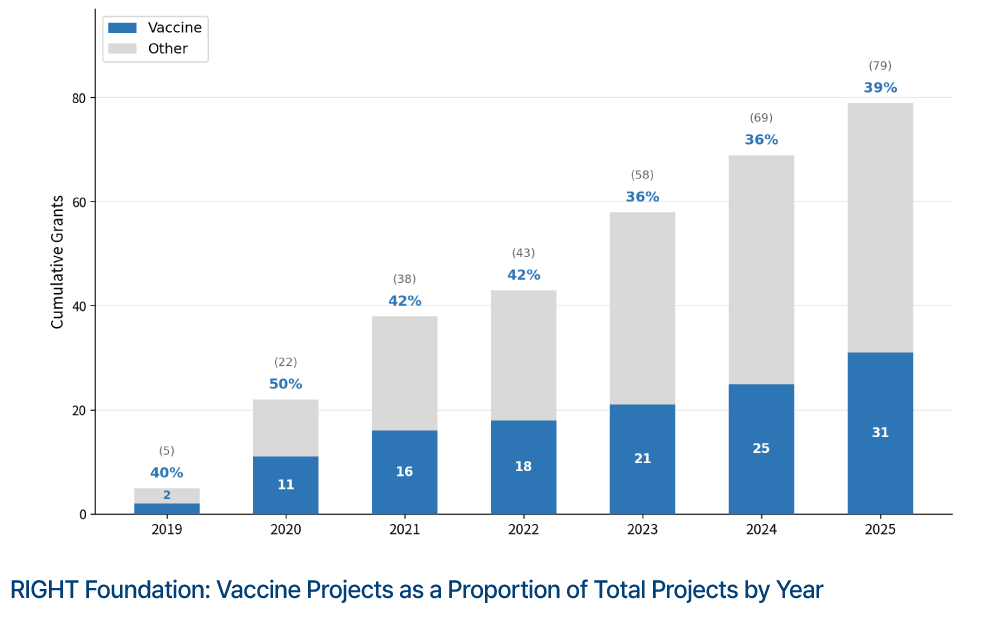
Since its establishment, RIGHT Foundation has directed the largest share of its funding toward the vaccine sector. With a particular focus on R&D addressing vaccine gaps, the Foundation supports long-term development through linked grant programs, ensuring that vaccines translate into real-world impact in public health settings.
One of the Foundation’s flagship initiatives is its support for cholera vaccine development. Cholera remains a significant threat in regions with inadequate water and sanitation infrastructure. The Foundation has supported related research since 2019, with the goal of developing a vaccine that offers broader coverage and longer-lasting protection than currently available options.

Another key initiative, which has been supported since 2020, is meningococcal vaccine development. Because the predominant serogroups of meningococcus vary by region, it is essential to develop vaccines that can effectively cover a wider range of serogroups. The Foundation supports the development of a low-cost pentavalent meningococcal conjugate vaccine that provides immunity against five serogroups.
The Foundation also supports technology development and workforce training to strengthen vaccine manufacturing capacity in low- and middle-income countries. This includes a project to facilitate the technology transfer of meningococcal vaccine production to a South African manufacturer, as well as vaccine manufacturing process training for biotech professionals in low- and middle-income countries, ongoing since 2023.
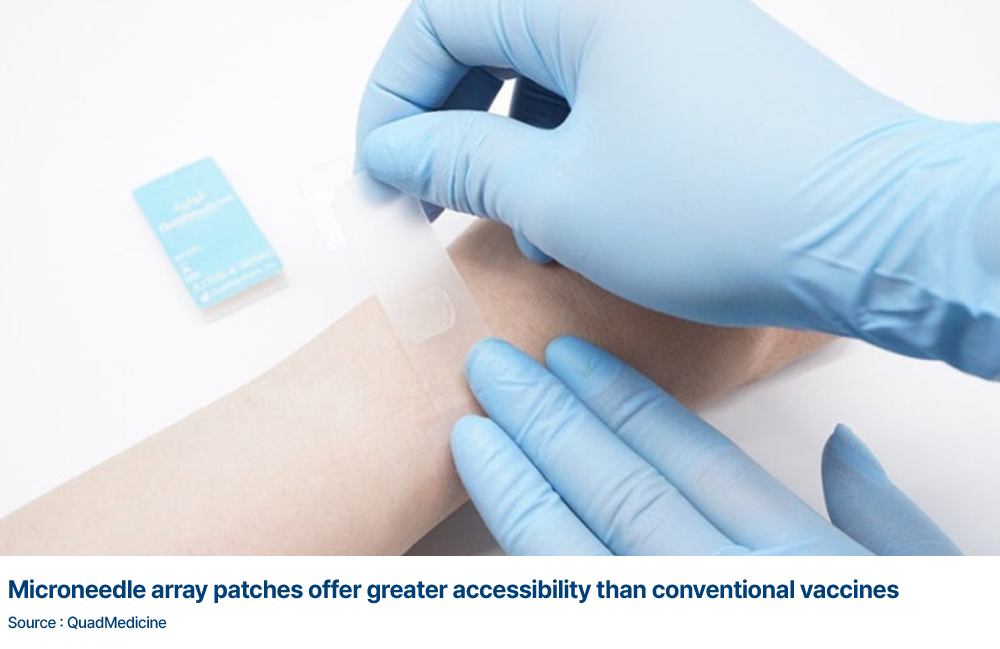
Microneedle array patch technology, an innovation with the potential to dramatically improve vaccine accessibility, is another major area of support. Microneedle patches enable vaccination even in settings that lack trained healthcare workers or cold chain infrastructure. The Foundation has continuously backed R&D efforts to apply this technology to vaccines for measles, rubella, tuberculosis, and other diseases.
The Foundation plans to continue supporting R&D aimed at closing vaccine gaps in global health settings.
[Key Vaccine Development Projects Supported By the RIGHT Foundation]