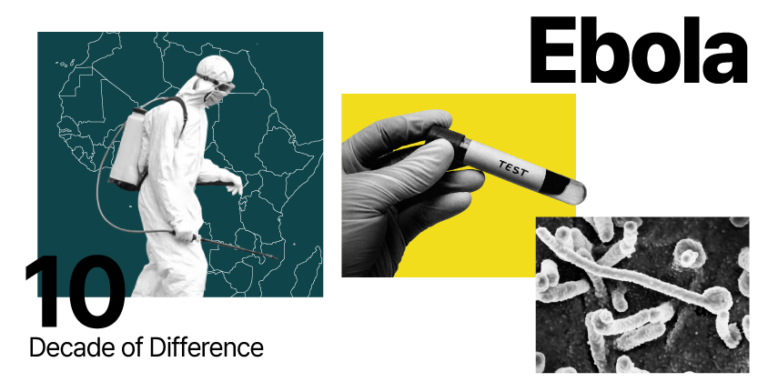
In May 2026, the World Health Organization (WHO) officially declared the Ebola outbreak in the Democratic Republic of the Congo (DRC) and Uganda a Public Health Emergency of International Concern (PHEIC). As of early July, cumulative confirmed cases had reached 1,729, with 582 deaths reported.
The outbreak is caused by Bundibugyo ebolavirus. As there are currently no approved vaccines or therapeutics for this virus, early diagnosis and isolation of infected individuals are key measures for preventing further transmission.
Delayed Diagnosis Fueled a Major Outbreak
Ebola, an acute viral infectious disease, has an incubation period of approximately 2–21 days. Early symptoms include high fever, headache, muscle pain, and vomiting, making it hard to distinguish from influenza or other infections. It spreads through direct contact with the blood and body fluids of infected people, and if it progresses to a severe stage it can lead to hemorrhage and multi-organ failure. The average case fatality rate is about 50%. Because infection is difficult to determine from early symptoms alone, delayed diagnosis increases the risk of community transmission.
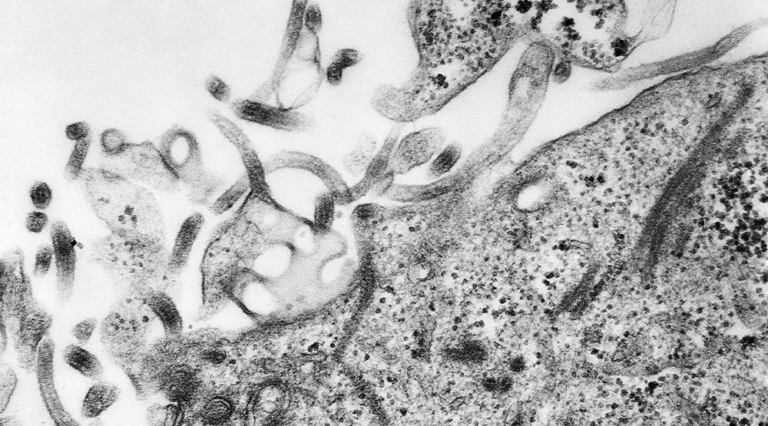
Ebola virus, TEM (tissue section)
Source: CDC, Dr. Frederick Murphy, 1977
The 2014–2016 West Africa Ebola outbreak, which infected more than 28,600 people and claimed 11,325 lives, also began with delayed diagnosis. The first case emerged in southeastern Guinea in December 2013, but Ebola was not confirmed as the cause until about three months later. In the meantime, the virus crossed borders into Liberia and Sierra Leone. Distrust of the government and public health authorities led to resistance to quarantine measures, making it difficult to detect cases and trace contacts smoothly.
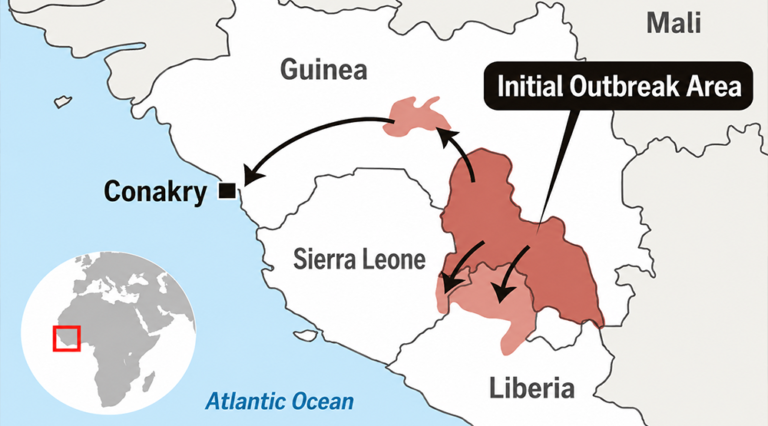
Initial outbreak area and early spread of the West Africa Ebola outbreak
As the outbreak spread rapidly, alert levels rose to the point that the United States and Europe activated emergency response systems, tightening airport screening and tracking and monitoring travelers, among other measures. The international community also mounted a full-scale response, including dispatching medical personnel and providing diagnostic support. Korea, too, sent its Korea Disaster Relief Team (KDRT) to Sierra Leone three occasions between December 2014 and March 2015.
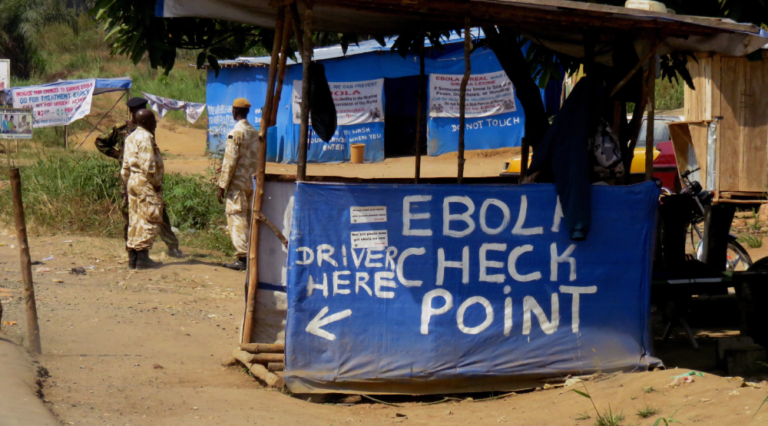
An Ebola checkpoint set up in Sierra Leone during the West Africa Ebola outbreak
Source: CDC Public Health Image Library, Rebecca Myers
Diagnostic Gaps Slowed Field Response
Following the West Africa Ebola outbreak, diagnostic technologies and testing capacity for Zaire ebolavirus were significantly strengthened. The introduction and evaluation of field-deployable automated RT-PCR testing and antigen rapid diagnostic tests (RDTs) improved access to diagnostic testing in the field and shortened testing turnaround times.
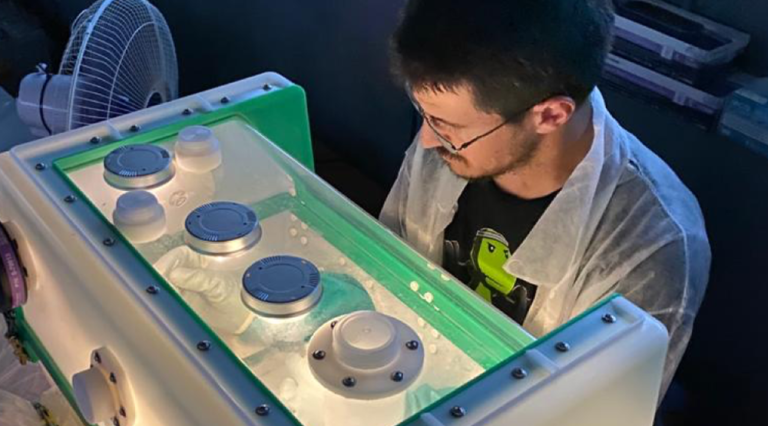
Touch-activated lighting being installed on a biosafety isolation box at a mobile Ebola field diagnostic laboratory in the Democratic Republic of the Congo, so that testing can continue at night
Source: CDC Public Health Image Library, James Graziano
The diagnostic and testing technologies developed in response to the West Africa outbreak, however, are not universally applicable across all ebolavirus species. The orthoebolaviruses that cause Ebola disease are classified into six species, each with distinct genetic and antigenic characteristics. As a result, medical countermeasures developed for one species cannot be readily applied to another. Although WHO has recently granted Emergency Use Listing (EUL) to a molecular diagnostic for Bundibugyo virus, the availability of diagnostics suitable for decentralized outbreak response remains limited.
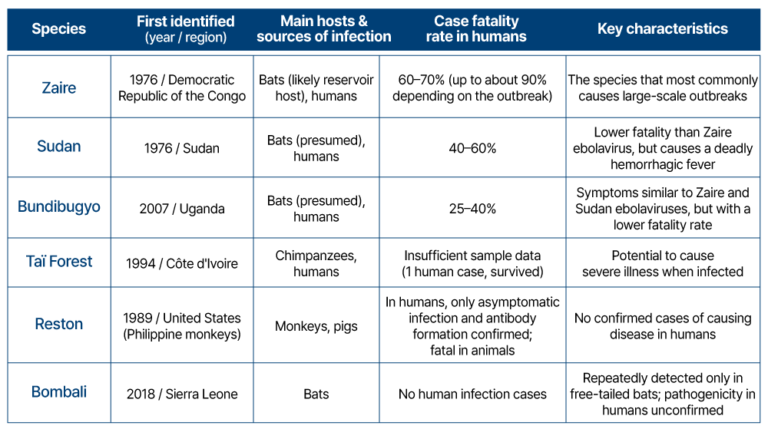
Types of orthoebolavirus that cause Ebola virus disease (EVD)
Source: WHO (Ebola disease), U.S. CDC (Emerging Infectious Diseases), Nature Microbiology (2018), IJID meta-analysis (2023). Species-specific fatality figures are based on a meta-analysis of outbreaks from 1976 to 2022.
The diagnostic gap was thrown into sharp relief in this Bundibugyo outbreak as well. Early in the outbreak, samples collected in the field in the DRC tested negative for Ebola, but Bundibugyo infection was confirmed only after the samples were sent to the DRC’s Institut National de la Recherche Biomédicale (INRB) for PCR testing and genomic analysis. This was the result of tests widely deployed in the field having been designed around Zaire ebolavirus, so that they could not reliably detect Bundibugyo ebolavirus infection.
By the time the infection was confirmed, suspected cases and deaths had already been reported across several health zones in the DRC’s eastern Ituri Province. Ituri Province, a commercial and mining hub bordering Uganda and South Sudan, sees heavy population movement and therefore carries a high risk of spread. Indeed, the infection later spread to North Kivu and South Kivu, and even in Kampala, the Ugandan capital across the border, confirmed cases traced to the DRC were identified.
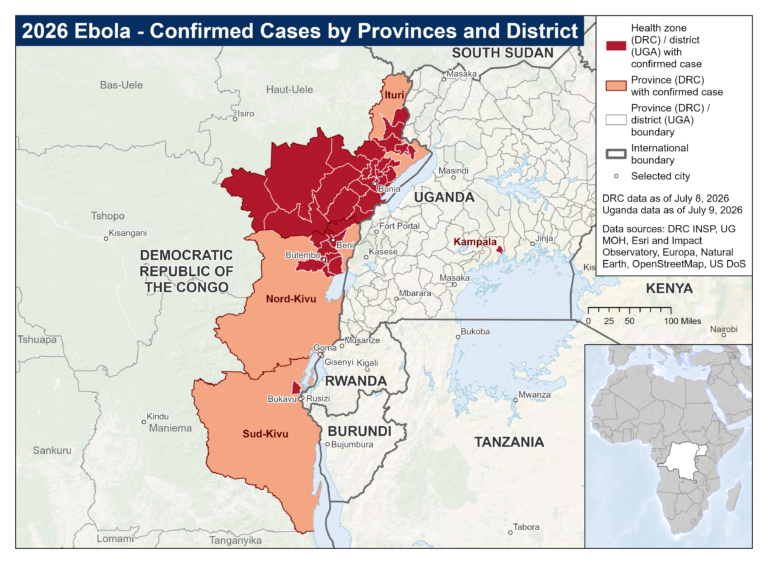
Ebola Outbreak: Current Situation – Map of affected areas
Data as of: DRC, July 1, 2026 / Uganda, July 2, 2026
Source: U.S. Centers for Disease Control and Prevention (CDC)
RIGHT Foundation has supported research and development so that the technologies needed for infectious-disease response can be developed in time to meet urgent needs in global health; during the COVID-19 pandemic as well, it backed rapid research and development by supporting nine related projects. The Foundation will continue to support the development of health technologies needed to strengthen preparedness and response to emerging infectious diseases.
※Sources
<Ebola West Africa, March 2014-2016>
<Ebola North Kivu/Ituri, Democratic Republic of the Congo, August 2018 – June 2020>
<2026 Ebola disease caused by Bundibugyo virus, Democratic Republic of the Congo & Uganda>
<Ebolavirus outbreaks by species and size, 1976-2014>