Sepsis is a life-threatening condition in which the body’s dysregulated response to infection causes organ dysfunction. Because sepsis can deteriorate rapidly and become life-threatening within a short period of time, recognizing the warning signs early and receiving prompt treatment are critical.
Despite its dangers, public awareness of sepsis remains relatively low. One challenge is that the early signs of sepsis can resemble those of common infections or other illnesses, making it difficult to recognize. Major signs and symptoms include fever, low body temperature and chills, confusion, difficulty breathing, clammy or sweaty skin, severe generalized pain or discomfort, a rapid or weak pulse or low blood pressure, and decreased urine output.
To raise awareness of the dangers of sepsis and emphasize the importance of early detection and timely treatment, the Global Sepsis Alliance established World Sepsis Day in 2012.
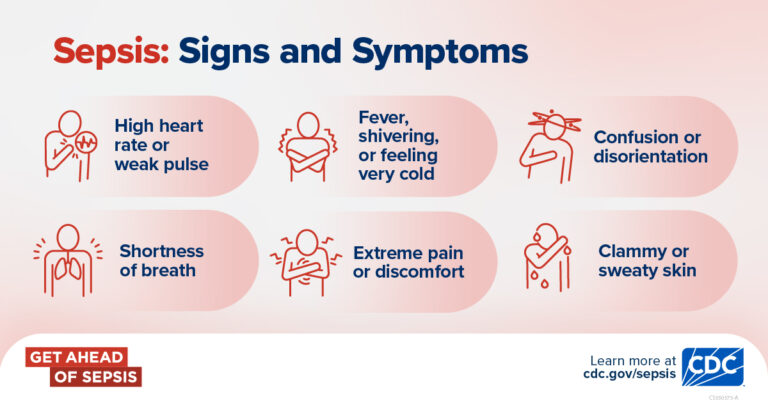
Early symptoms of sepsis, such as fever and chills, can resemble those of common infections or other illnesses, making sepsis difficult to recognize.
Photo credit : U.S. Centers for Disease Control and Prevention (CDC)
Most cases of sepsis are caused by bacterial infections, but viral, fungal, and parasitic infections can also lead to sepsis. Healthcare-associated infections that occur during treatment in hospitals and other healthcare settings can also lead to sepsis. Such infections may involve antibiotic-resistant pathogens, making treatment even more difficult.
The Pandemic Disrupted the Downward Trend in Sepsis
From 1990 to 2019, the global incidence of sepsis showed an overall downward trend. According to a Global Burden of Disease Study (GBD) 2021 analysis of sepsis published in The Lancet Global Health in 2025, the number of sepsis cases worldwide decreased by 5.5%, from approximately 136 million in 1990 to approximately 128 million in 2019. Sepsis-related deaths also fell from approximately 16.5 million in 1990 to approximately 14.1 million in 2019.
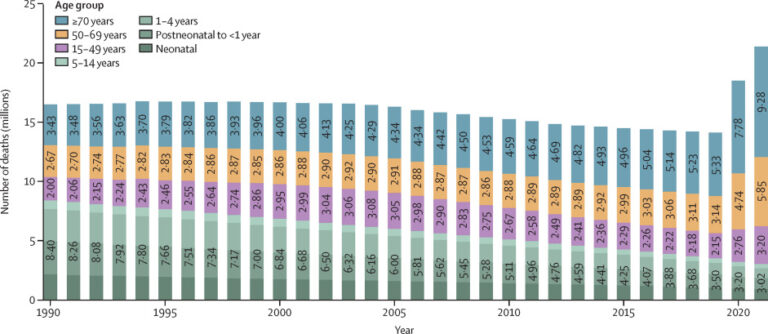
Global time trend of sepsis, by age, 1990–2021
Source : GBD 2021 Antimicrobial Resistance Collaborators, The Lancet (2024), Figure 1, CC BY 4.0.
However, this downward trend was sharply disrupted during the COVID-19 pandemic in 2020–2021. In 2021, an estimated 166 million sepsis cases and 21.4 million sepsis-related deaths occurred worldwide. In other words, decades of progress were reversed during the pandemic. COVID-19 itself was a major driver of this increase, while broader changes across health systems during the pandemic may also have affected health system’s capacity to respond to sepsis.
This demonstrated how quickly sepsis can emerge as a major threat when the infection burden surges and health systems become overwhelmed. These risks can be particularly severe in regions where healthcare resources and capacity to respond to infectious diseases are limited.
Sepsis: How Healthcare Environments Shape Survival
The 2026 World Sepsis Day – Theme & Policy and Media Brief: Invest in Sepsis – Save Lives reports, based on existing global estimates, that around 85% of the global sepsis burden occurs in low- and middle-income countries (LMICs). The World Health Organization (WHO) also notes that the burden of sepsis incidence and mortality is particularly high in LMICs, while healthcare resources available to respond to sepsis are relatively limited.
Antimicrobial resistance further complicates the problem. When the bacteria causing an infection do not respond to existing antibiotics, treatment options become more limited, making it more difficult to initiate appropriate treatment.
These disparities can be particularly devastating in neonatal sepsis. According to a 2026 study, Global Trends in Neonatal Sepsis Mortality and Attributable Risk Factors From 1990 to 2021, which analyzed GBD 2021 data, an estimated 206,000 newborns died from early- and late-onset neonatal sepsis worldwide in 2021. Mortality rates tended to be higher in regions with lower Socio-demographic Index (SDI) levels, with the highest rates observed in sub-Saharan Africa. Neonatal sepsis is a global health challenge in which limited healthcare access and antimicrobial resistance directly impact survival outcomes.
RIGHT Expands Treatment Options for Neonatal Sepsis
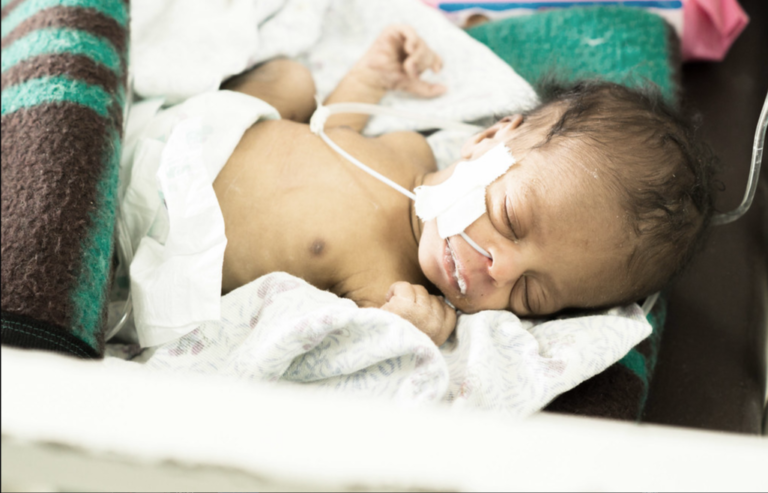
Sepsis is one of the major causes of infection in newborns. A newborn receiving treatment for early-onset neonatal sepsis and respiratory distress.
Photo Credit : UNICEF
The RIGHT Foundation supports research to develop new antibiotic combination therapies for neonatal sepsis that is difficult to treat due to antimicrobial resistance.
The Foundation-supported project, “Novel Antibiotic Combinations to Address AMR Burden in Neonatal Sepsis,” uses an innovative approach to identify new combinations of three antibiotics—flomoxef, fosfomycin, and amikacin—and evaluate their safety and efficacy.
Through this research, the Foundation hopes to contribute to efforts to combat neonatal sepsis by developing improved or new treatment regimens that can be used across diverse healthcare settings.
[RIGHT Foundation-Supported Sepsis Project]
Novel Antibiotic Combinations to Address AMR Burden in Neonatal Sepsis
※Sources
<Guidelines on the Clinical Management of Sepsis>
<Global Trends in Neonatal Sepsis Mortality and Attributable Risk Factors From 1990 to 2021>
<Global, regional, and national sepsis incidence and mortality, 1990-2021: a systematic analysis>
<2026 World Sepsis Day – Theme & Policy and Media Brief: Invest in Sepsis – Save Lives>